
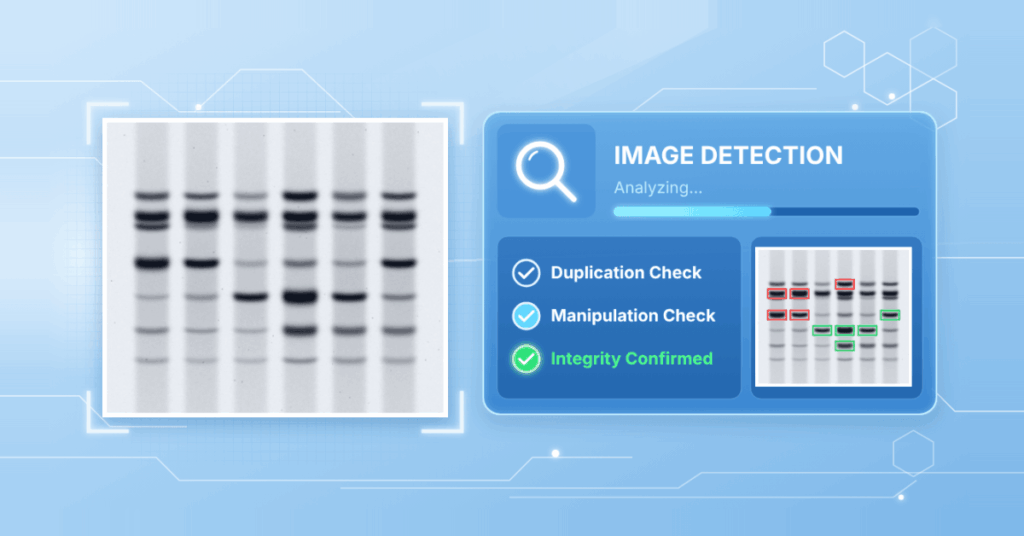
ImaChek is an advanced automated image detection and comparison system designed to help academic institutions, publishers, and researchers enhance image integrity by flagging potential image issues in papers.
In recent years, the number of retractions has steadily increased. Scholarly publishers and institutions across fields such as life sciences, medicine, and higher education are placing greater emphasis on academic integrity and research transparency, urging researchers to adhere to higher standards and demonstrate the credibility of their work.
As technology solutions become widespread, many researchers rely on screening software to check their papers for text similarity to ensure ethical conduct. However, there may still be few adequate tools for finding image similarity within a paper. Duplicated and manipulated images are among the reasons for retractions; hence, researchers need to carefully verify the authenticity of their images as well as their text.
An image analysis tool can help researchers evaluate the authenticity of images, which is crucial throughout their careers. This is where ImaChek comes in as an assistant for researchers.
What is ImaChek?
ImaChek is an advanced automated image detection and comparison system designed to help academic institutions, publishers, and researchers enhance image integrity by flagging potential image issues in papers. It aims to help researchers strengthen their academic credibility and their confidence in responsible research practices.
ImaChek offers two main image analysis functions: Image Duplication and Image Manipulation. For instance, if researchers would like to check whether a Western blot image in a paper has been duplicated, they can screen their papers with ImaChek and receive results within minutes. The results show which portions of the images have been flagged as potential issues, which boosts confidence and reduces the risk of ambiguity in research.
Key Features of ImaChek
Automatic Detection and Cropping
Once users upload images or documents to the repository, ImaChek detects each image and crops it correctly from its original size, allowing users to select whether to include the image in the analysis. The process runs automatically, saving users a significant amount of time and effort.
Advanced Algorithms and Detection
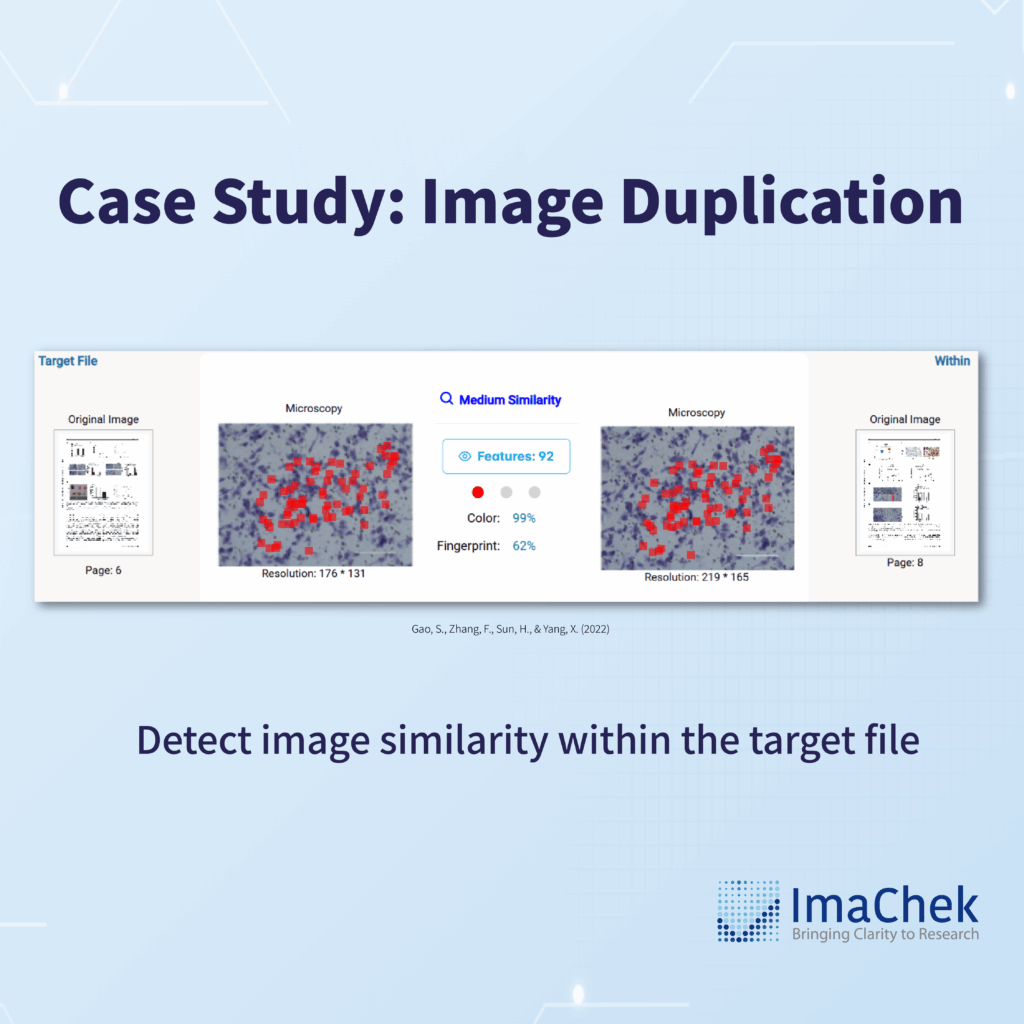
ImaChek uses precise computer vision algorithms to assess graphical figures, including Western blots, microscopy images, gels, and charts. For image duplication, ImaChek checks whether an image has appeared two or more times or whether a portion of a highly similar image has been reused unintentionally.
For image manipulation, ImaChek provides 28 built-in filters that reveal the hidden traces of an examined image. Manipulated images are difficult to identify by eye alone, given that they look like originals unless other evidence shows they have been spliced. Relying on a tool like ImaChek increases the chance that potential issues will surface.
Unlimited Analysis of Pages and Sub-Images
With ImaChek, users can scan an unlimited number of pages and sub-images within a PDF document, so they don’t need to worry about how many images can be analyzed. They can run a comprehensive analysis that compares the images against open-access articles from the PubMed database, further easing researchers’ concerns about image issues.
The Core Values of ImaChek
Image integrity has become a critical component of credible scientific research, and a professional tool can help determine whether an image is suitable for inclusion in a research paper.
To uphold the professional integrity of researchers, ImaChek is built on three core values:
- Maintain Research Integrity
- Researchers can detect potential image issues before submitting their manuscript, helping mitigate the risk of honest mistakes and maintain scientific integrity.
- Accelerate the Publication Process
- Using ImaChek to check for images can enhance review efficiency and streamline manuscript preparation.
- Protecting Institutional Reputation
- Academic institutions can reduce their exposure to integrity concerns and protect their reputation.
With ImaChek as an assistant, researchers can spend less time on the exhausting manual image comparison and devote more effort to in-depth research, helping build an ethical and transparent research environment.
Frequently Ask Questions (FAQs)
What is ImaChek?
ImaChek is an advanced automated image detection and comparison system. It is designed to help academic institutions, publishers, and researchers enhance image integrity by flagging potential image issues in papers.
What types of image issues can ImaChek detect?
ImaChek has two main functions: Image Duplication and Image Manipulation. For duplication, it checks whether an image has appeared two or more times, or whether a portion of a highly similar image has been reused unintentionally. For manipulation, it provides 28 built-in filters that reveal hidden traces, such as splicing, that are hard to spot by eye.
What are the main features of ImaChek?
ImaChek offers three main features: automatic detection and cropping, advanced algorithm and detection, and unlimited analysis of pages and sub-images within a PDF.
What core values is ImaChek built on?
ImaChek is built on three core values: maintaining research integrity, accelerating the publication process, and protecting the institutional reputation.