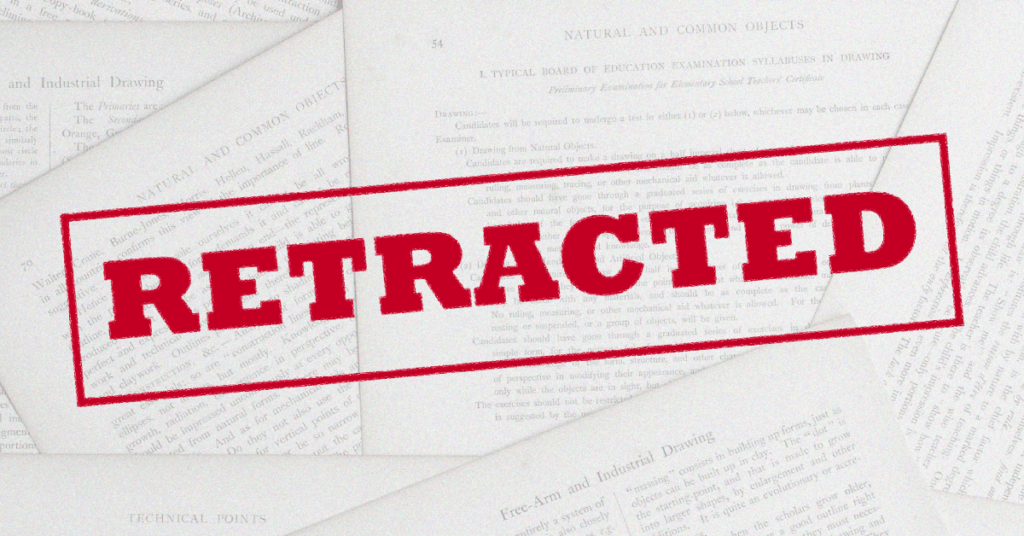
A paper retraction is a formal notice, which means that a published article should no longer be relied upon due to errors or other issues affecting the reliability of its findings or conclusions.
While searching for academic references, researchers may come across certain published articles marked with a prominent “RETRACTED” stamp. What does this label mean for readers and the academic community?
What Does Retraction Mean?
A paper retraction is a formal notice that a published paper is no longer considered reliable due to issues such as inaccurate citations, erroneous calculations, image duplication, plagiarism, or flawed conclusions. Many retractions result from honest mistakes, particularly those made by researchers who are less familiar with manuscript preparation guidelines and the consequences of paper retraction.
COPE Guidelines on Retraction
Although specific criteria for retracting a published paper vary across publishers and institutions, most journals follow the framework issued by the Committee on Publication Ethics (COPE) to uphold research integrity.
According to COPE’s retraction guidelines, editors may decide to retract a publication when they no longer have confidence in the reliability of a paper’s findings or conclusions. Key grounds for retraction include:
- Misrepresentation: Deceptive practices such as identity theft or undisclosed use of artificial intelligence (AI) tools.
- Redundant publication: Findings previously published elsewhere without proper attribution, disclosure to the editor, permission to republish, or justification.
- Unauthorized use of materials or data: Material or data used without authorization, where removing it would affect the paper’s results and conclusions.
- Compromised peer review: Reliance on paper mills, citation manipulation, or other review processes that fail to meet publication standards.
The Effects of Retraction on Researchers
A retraction does not necessarily end a researcher’s career; however, it can pose a threat to their professional standing. If a retraction gains widespread attention, peers may scrutinize the research practices behind the paper and even affect the researcher’s integrity.
When a paper is retracted, the original article usually remains available, along with a retraction notice explaining why it was withdrawn. For authors, this may mean going back over the study with their co-authors and the journal. Researchers who have cited the paper may also need to take another look at any findings or conclusions that were based on it.
How Can Researchers Prevent Retraction?
To avoid retractions, researchers across academic fields should follow ethical principles throughout the research process. Researchers should ensure the data and figures in their papers are accurate and unbiased. Double-checking results can carefully catch minor mistakes before they lead to serious consequences.
Tools such as iThenticate can check text similarity before submission and help researchers identify unintentional overlap with existing publications. In addition, citing sources accurately can reduce the risk of plagiarism allegations and improve clarity. Consistently ensuring the research meets high integrity standards builds trust with both institutions and readers.
How Does ImaChek Protect Researchers from Paper Retractions?
ImaChek is an AI-powered automated image checking system. It analyzes a wide range of scientific image formats and compares images to help identify duplication, manipulation, and reuse.
In addition to text similarity checks, identifying image issues before publication is one of the most challenging tasks for researchers. Images play a critical role in scientific papers, so they should be examined carefully to avoid integrity problems.
However, problematic images are difficult for researchers to spot by eye. ImaChek addresses this challenge by analyzing a wide range of scientific image formats to support research integrity. Its image comparison technology enables researchers to detect duplication, manipulation, and reuse that could undermine scientific credibility.
Since ImaChek flags concerns before final submission, researchers can correct these image issues early. This helps researchers mitigate the risk of retraction and gain greater confidence in their findings.
Paper retractions pose significant challenges for researchers; hence, upholding rigorous ethical standards and ensuring reliable findings are essential. Using advanced solutions like ImaChek can help researchers strengthen research integrity and protect their work.
Frequently Ask Questions (FAQs)
What is a paper retraction?
A paper retraction is a formal notice, which means that a published article should no longer be relied upon due to errors or other issues affecting the reliability of its findings or conclusions.
In what situations may a paper be retracted?
A paper may get retracted when it contains issues such as inaccurate citations, erroneous calculations, image duplication, plagiarism, or flawed conclusions.
How can a retraction affect a researcher?
A retraction can affect researchers’ professional standing and limit future opportunities such as funding, collaborations, or promotions. It can also affect researchers who cited the retracted paper in their own work.
How can researchers protect the integrity of their paper and reduce the risk of retraction?
Researchers should adhere to ethical principles, double-check their data and figures, and use tools such as ImaChek to detect image issues before submission.